How to Take Your Business Online: A Practical Step-by-Step Roadmap
Start with a professional website, measure real customer interest, and add catalogue, e-commerce and shipping capabilities only when your business is ready.
Taking a business online does not have to begin with a large, complicated e-commerce website. A new or traditionally offline business may not yet know which products will attract online interest, how customers prefer to contact it, or whether online orders will justify the operational investment.
A phased approach reduces this uncertainty. The business starts with the features it needs today, measures customer behaviour and invests in the next phase when the evidence supports that decision. Strong analytics should connect every phase so growth is guided by real activity rather than assumptions.
Why launching full e-commerce immediately can be risky
E-commerce introduces more than a shopping cart. It can require online payments, taxes, inventory, product variants, order workflows, delivery rules, returns, notifications, customer support and reconciliation. Building all of this before validating online demand can increase cost and delay the initial launch.
This does not mean e-commerce should be avoided. It means the business should reach it through a deliberate roadmap, using each earlier phase to learn what the next phase must solve.
The four phases of taking your business online
Phase 1: Launch a professional business website
Begin with a focused website that establishes trust, explains what the business offers and gives potential customers simple ways to make contact.
The first website can include
- A professionally designed homepage
- About Us and Contact Us pages
- Product or service overview pages
- Dedicated pages for 5-10 popular products
- Contact form, phone and WhatsApp calls to action
- Google Maps and essential business information
- Mobile-responsive design, SSL and hosting
- Basic on-page SEO and an XML sitemap
- Analytics for visits, engagement and enquiries
The goal of this phase is visibility and validation - not online checkout. It gives the business a credible destination for referrals, social campaigns, local searches and direct customer visits.
CubiqWeb can create this foundation through its professional business website service, including responsive pages, basic SEO, hosting, SSL, contact and WhatsApp options. Explore CubiqWeb Business Websites.
Phase 2: Expand into a searchable product catalogue
When the business has a larger product range or the first phase demonstrates customer interest, the website can grow into a structured catalogue.
Catalogue capabilities can include
- Categories, subcategories and product listing pages
- Individual product detail pages with images and specifications
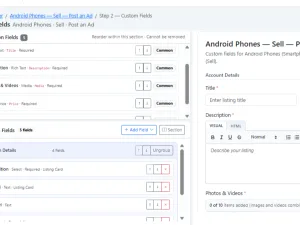
- Category-specific attributes, variants or other dynamic fields
- An enquiry form, phone action and WhatsApp action for every product
- Favourite, share, login and registration features when required
- An admin panel for creating, updating and archiving products
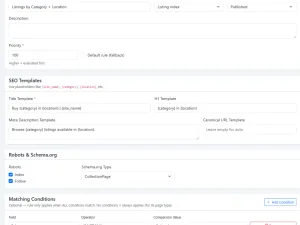
- SEO-friendly URLs, metadata and structured content
- Basic or advanced search based on catalogue complexity
| Catalogue size | Recommended product discovery |
|---|---|
| Up to 50 products | Clear categories and simple navigation |
| 50-100 products | Keyword search and basic filters |
| 100-1,000 products | Category-specific search and filters |
| More than 1,000 products | Advanced faceted search and improved indexing |
These quantities are practical guidelines, not fixed rules. Product complexity and customer behaviour can justify stronger search at a smaller catalogue size.
CubiqWeb's modular marketplace platform can provide catalogue, enquiry, admin, search, SEO and analytics capabilities without requiring the business to enable online sales immediately. View CubiqWeb packages and pricing.
Phase 3: Add e-commerce without immediate shipping integration
When enquiries and catalogue activity show that customers are ready to purchase, the platform can be expanded with ordering and payment capabilities.
The e-commerce phase can introduce
- Shopping cart and checkout
- Online payment gateway
- Product variants and inventory
- Tax and discount calculations
- Customer accounts and order history
- Admin order management
- Email or WhatsApp order notifications
At first, shipping may be handled manually when order volume and delivery regions are limited. This reduces initial integration work while the business learns how customers use checkout. Delivery charges, expected timelines, cancellation terms and return rules must still be clearly communicated before payment.
Phase 4: Automate shipping and fulfilment
Once online order volume becomes stable, a shipping partner can be integrated to reduce repetitive work and improve fulfilment visibility.
Shipping automation can include
- Postcode serviceability and delivery-charge checks
- Courier selection and shipment creation
- Shipping label and invoice generation
- Pickup scheduling and tracking updates
- Customer delivery notifications
- Returns and reverse logistics
- Cash-on-delivery reconciliation
Analytics should connect every phase
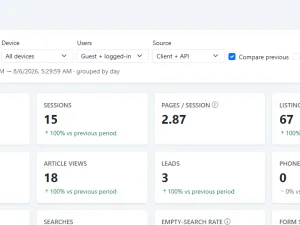
Website analytics should not be an afterthought added only after e-commerce launches. CubiqWeb can connect visits, page engagement, searches, product views, contact actions, enquiries and later order events into a clearer customer journey.
| Phase | Important measurements | Decision supported |
|---|---|---|
| Business website | Visitors, traffic sources, popular pages, CTA clicks and enquiries | Are customers discovering and trusting the business? |
| Product catalogue | Product views, searches, empty searches, filters, favourites and product enquiries | Which products demonstrate real demand? |
| E-commerce | Add-to-cart rate, checkout starts, abandonment, orders and average order value | Are customers willing to purchase online? |
| Shipping automation | Processing time, shipping cost, delivery success, returns and failed deliveries | Is fulfilment automation worthwhile? |
Turn analytics into business decisions
Numbers become valuable when they lead to a specific action.
| Analytics finding | Possible business decision |
|---|---|
| Popular product pages generate frequent calls or enquiries | Add more related products and richer product information |
| Customers repeatedly search for products that are unavailable | Expand inventory or add the missing category |
| Product views are high but enquiries are low | Improve images, pricing, specifications or CTA placement |
| Mobile traffic is high but form completion is low | Simplify the mobile enquiry experience |
| Enquiries consistently request online ordering | Evaluate investment in cart, checkout and payments |
| Cart activity is strong but completed orders are low | Investigate payment, pricing, trust or checkout friction |
| Manual fulfilment consumes increasing staff time | Integrate a suitable shipping partner |
How CubiqWeb supports the complete journey
CubiqWeb allows a business to begin with a focused online presence and move towards a larger catalogue and transactional platform without treating every possible feature as a first-day requirement.
- Launch a professional, responsive business website.
- Measure visits, product interest, contact actions and enquiries.
- Expand into a managed catalogue with search and product-level enquiries.
- Use catalogue analytics to validate e-commerce demand.
- Add cart, checkout and payments when customers are ready.
- Automate shipping when order volume justifies the integration.
This phased approach keeps the platform aligned with business maturity. It can reduce unnecessary early complexity while preserving a clear path towards online selling and operational automation.
Start small, measure carefully and grow with evidence
A successful online platform is not defined by how many features it launches on the first day. It is defined by how effectively it helps customers discover, evaluate and eventually buy from the business.
By connecting every phase with strong analytics, CubiqWeb helps business owners see what customers want, identify where opportunities are being lost and decide when the next investment is justified. Instead of guessing what to build, the business can make each step using measurable evidence.
Take the right first step for your business
Whether you need a professional website, a searchable product catalogue or a roadmap towards e-commerce, CubiqWeb can help you choose a practical starting point.